
Growing Guide: Sweet Peas for Warm Climate Flower Farmers
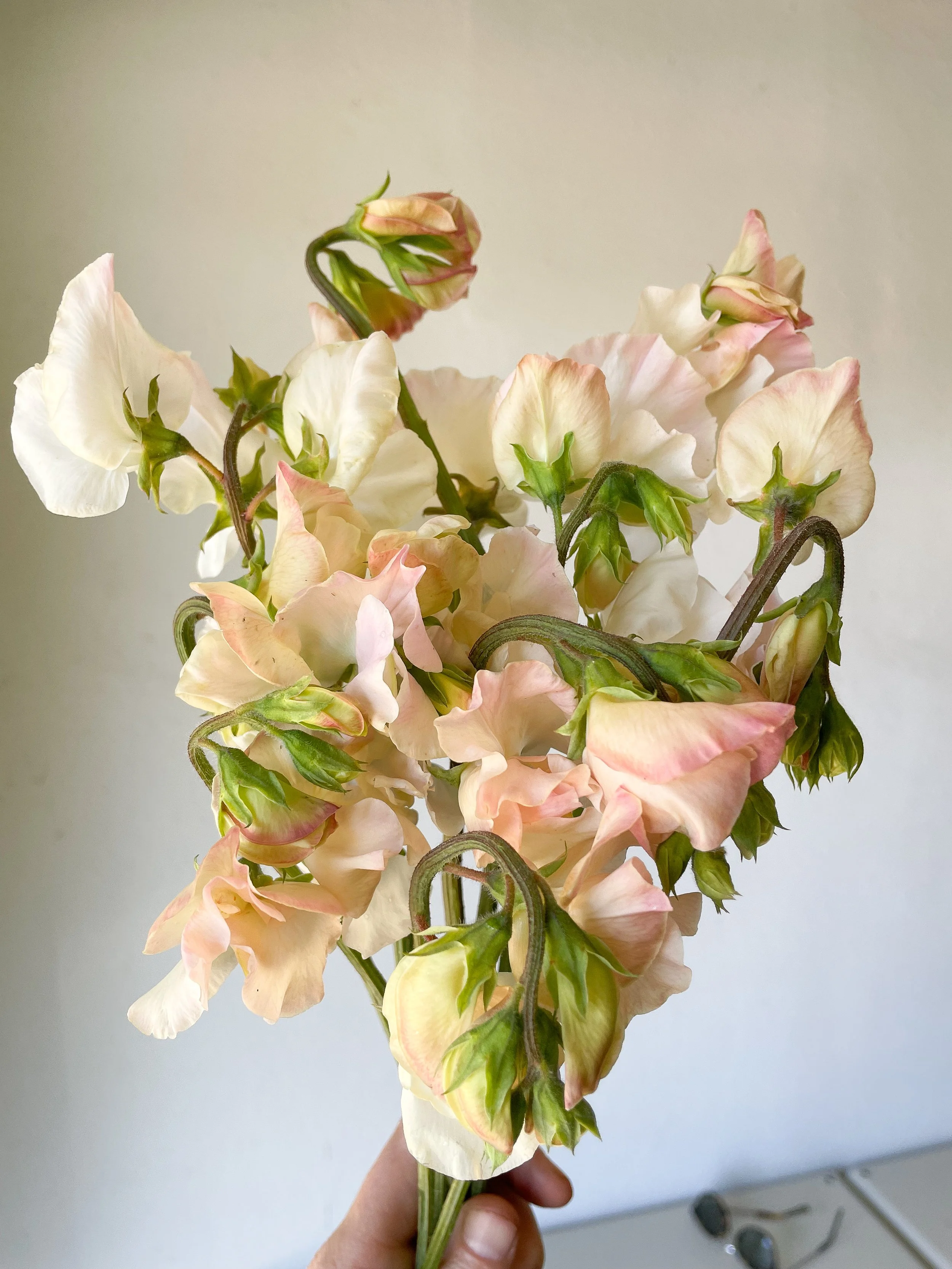
Sweet Pea “Bix”
Sweet Pea Tips & Tricks for Zone 9b (or climates with a short “cool season”):
Sweet peas are constantly being talked about as some of the easiest plants to grow. While I agree that they are easy to start from seed, I will say that they are definitely not “easy” to succeed at in Zone 9b. Sweet peas love cool, sunny weather – not something we get a lot of here in the Central Valley. In coastal areas that get a nice cool evening and breezy sunny days, sweet peas will flower late into the summer (jealous!!) but here in the Valley we tend to go from a rainy cool spring straight to dry, hot summer in just a matter of weeks. So what’s the trick?? For me, it’s when I start my seeds, and choosing the right varieties, and setting my expectations low for a 4 week bloom window.
When to Start:
I’ve tried it all – September, October, November, even as late as February. For me and my farm, the mid to late October window has been the most successful for starting my sweet peas in deep root trainer trays. I don’t soak my seeds or nick them, I simply plant about ¼” deep into the trays and let them germinate at their own pace. I think sweet peas dislike being bossed around, so having them start in the most natural of conditions in our zone seems to be beneficial (aka outdoor, on a table, no grow lights or heating mats). In mid to late October we’re usually hovering around the mid 80 degree temp, which creates the perfect conditions for seed germination without any need for heat mats or lights. I set my trays out on my potting table and cover them with netting to keep the birds/squirrels away and let them do their thing.
Starting in October, regardless of the variety, seems to allow the seedlings to establish their roots in the nice cool winter months, so that they’re ready to burst once the daylight hours lengthen and trigger flowering. Starting earlier than October has fried my seedlings in the past (we are still so hot in Sept) and December/Jan still works, but the plants seem less robust compared to my October seedlings and flower a little later, cutting into that crucial 4 week window that I’m hoping for. My early varieties (~10 hours of daylength minimum) start to flower in late March, and if I’m lucky I’ll have my peak blooms around Mother’s Day. Bloom production tends to taper off mid May as our temps hit upper 80s and 90s. The stems become shorter and the plants start setting seed faster, preparing to go brown and die in the summer heat.
Seed Sourcing:
You can find sweet pea seeds almost anywhere, but in my experience it’s the seed that’s grown and harvested in similarly warm climates that do best here. I love getting my seed from Psalter Farms (San Diego), Wild Whimsy (Northern California), and Happy as a Coneflower farm (humid South).
What You’ll Need:
Investing in deep root potting trays is key. Sweet peas have long tap roots and don’t like to be disturbed when transplanting, and giving them extra depth to grow in the tray gives you so much more wiggle room for transplanting since you won’t be rushing to get them out of teeny cramped cells. If you do start them in a smaller tray, you can pot up into 3 or 4 inch pots or just make sure to transplant once they have a few sets of leaves on them (usually about 3-4 weeks old in my experience.
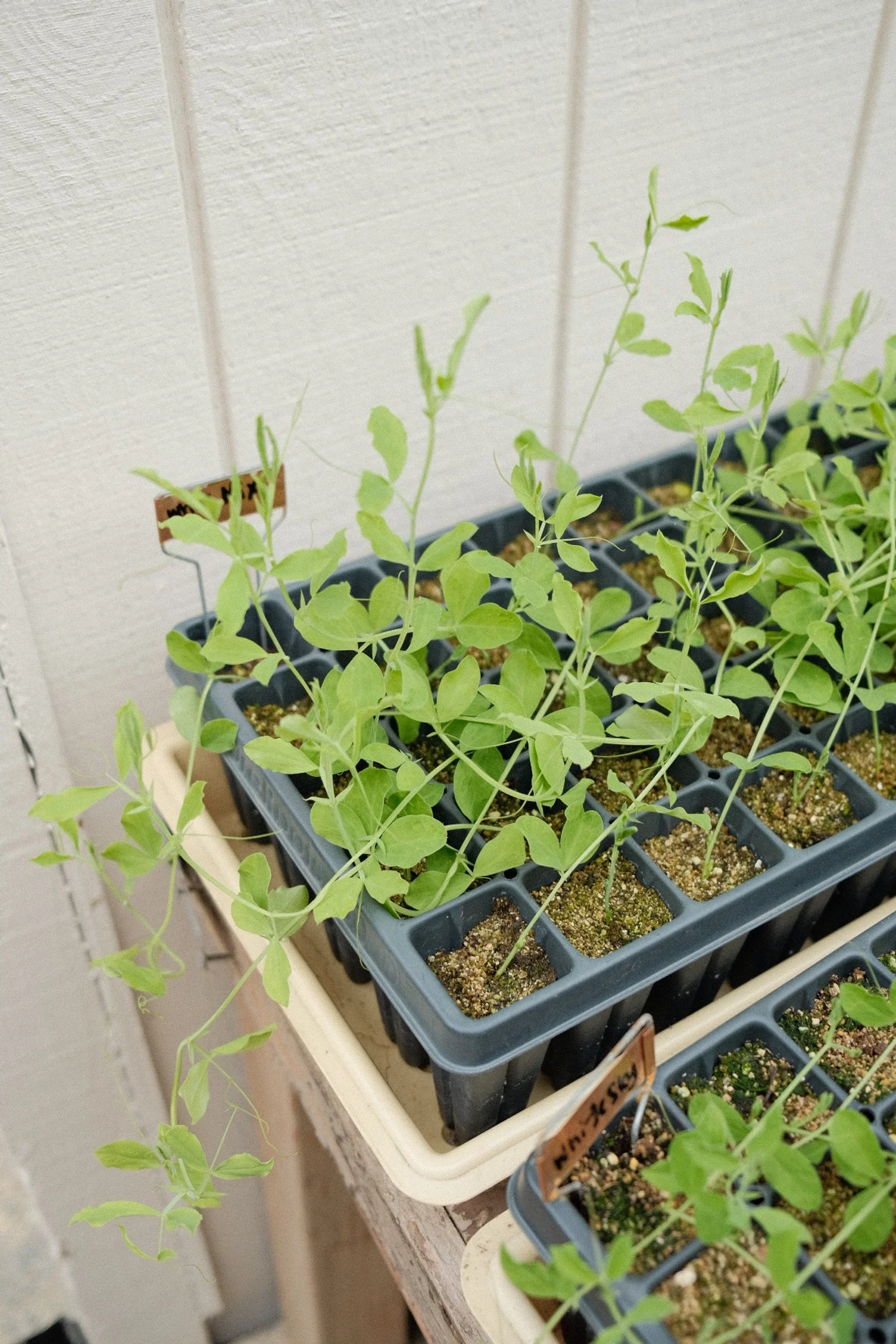
These root trainers from Greenhouse Megastore and trays are my go-to’s for starting sweet peas.
Prepping the Soil/planting area:
Sweet peas are heavy feeders, so I like to dig a long trench and put compost + fertilizer down about 12 inches. I lay out 6-8 inch drip tape (one tape for each row) and staple down. At the field I have 8 foot wood poles sunk into the ground every 5ish feet for two 25ish foot rows. I zip tie rolled out wire to provide the support, but you could also use hotinova netting if you prefer. I prefer to use things that can be reused year after year and don’t get cut by my snips when harvesting. On the farmette I’m growing sweet peas on cedar trellises on a 20 foot row for purely aesthetic reasons (possible because of the smaller scale too!).
Trellising & Support:
At the field I have 8 foot wood poles sunk into the ground every 5ish feet for two 25ish foot rows. I zip tie rolled out wire to provide the support, but you could also use hotinova netting if you prefer. I prefer to use things that can be reused year after year and don’t get cut by my snips when harvesting. On the farmette I’m growing sweet peas on cedar trellises on a 20 foot row for purely aesthetic reasons (possible because of the smaller scale too!).
Other Tools:
Potting soil : I get mine from Lowe’s but check around for best pricing
Trellis: Love these cedar ones from Earth Easy
Drip Tape: I use 6” spacing on most of my rows to get as even saturation as possible
Earth Staples: Use these to secure your drip tape
Roll out wire: Can zip tie to t-posts or cedar posts, whatever you’re using for trellis support
Powdery Mildew Prevention: Milstop early in the season has made a difference for me!
Pest Management: Set up a ladybug subscription with Nature’s Good Guys for Feb-April to combat aphids.