
Growing Ranunculus: Keeping It Simple in Warm Climates
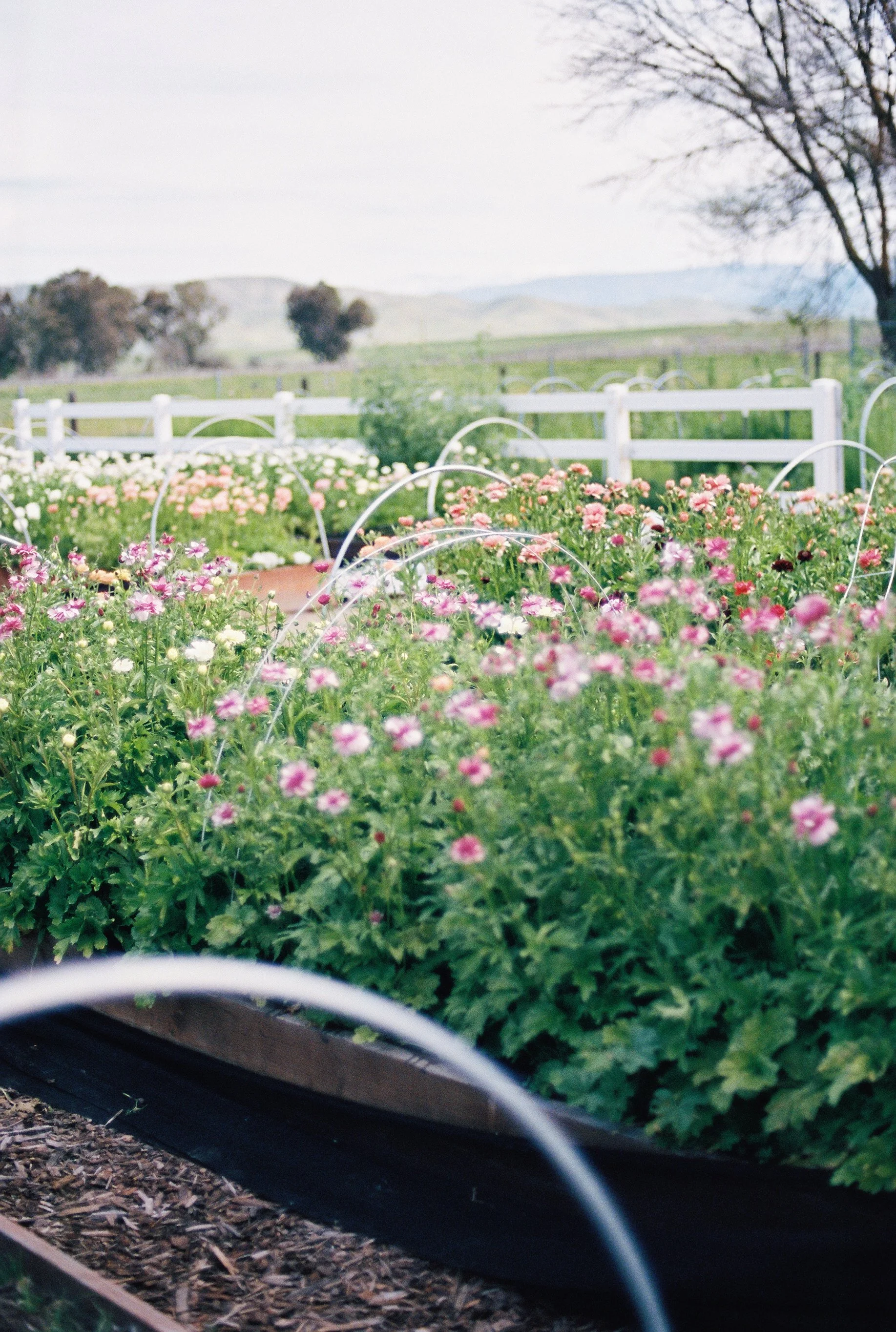
Raised beds with hoops that support either my shade cloth or clear plastic, depenting on weather needs.
I started growing ranunculus in my second season of farming, and wow, did I learn a lot that year
My planting space was an old sandy horse arena with an intensely active population of gophers, so I decided to immediately invest in raised beds with gopher wire stapled underneath. While the upfront cost was hefty, these raised beds have served me well over the years and have been an ideal planting site for both regular and butterfly ranunculus.
Making Them Profitable: The toughest part about growing ranunculus in our zone 9b climate is the super short spring, which we have to make back the investment on some pretty pricey corms. This year, I spent around $2–3 per corm, and many of the corms in my order were canceled or substituted. It’s so tough to predict what you’ll actually get from the supplier that we’ve taken to calling it the “ranunculus rodeo” around here to keep things light.
With such a large upfront investment, I’ve taken a very “minimal” approach to planting ranunculus to keep my hours of labor on them to a minimum. I don’t pre-sprout my corms like many farmers do, as the added time, space, and expense of planting them in trays and then transplanting doesn’t work for my schedule or budget. While I might not get perfect viability on all of my corms, I’ve almost never had significant holes in my rows and will probably always plant this way. I’m happy to share my no-fuss approach if you’re willing to take the risk like I am.
Here’s my process in a nutshell:
Timing for earliest ranunculus blooms
I like to soak my ranunculus in October if possible, and have them planted out by mid October, mid November at the latest. I don’t succession plant, but I do try to choose a mix of varieties that I know bloom early and a bit later to try and have staggered harvest windows.
Soaking Ranunculus Corms
Soak each variety in its own mesh bag (if yours came in paper bags, you can order these) for minimum 4 hours, maximum 6 hours
Keep the faucet on a tiny trickle to help keep the water flowing/aerated
Water temp should be lukewarm, erring on the side of cool
If I can’t plant them right away, I’ll drain the mesh bag and place the soaked ranunculus in a sterilized bucket in the cooler for up to a week
Soil Prep for Ranunculus Beds:
I add 3-4 inches of compost each fall to the ranunculus beds. If we’ve had no rain, I’ll hose the bed down so the soil has some damp moisture in it when I go to plant.
Drip: I have 4 foot beds and 5 lines of 6 inch emitter spacing drip tape
My raised beds also have hoops to support any plastic or shade cloth I need to cover
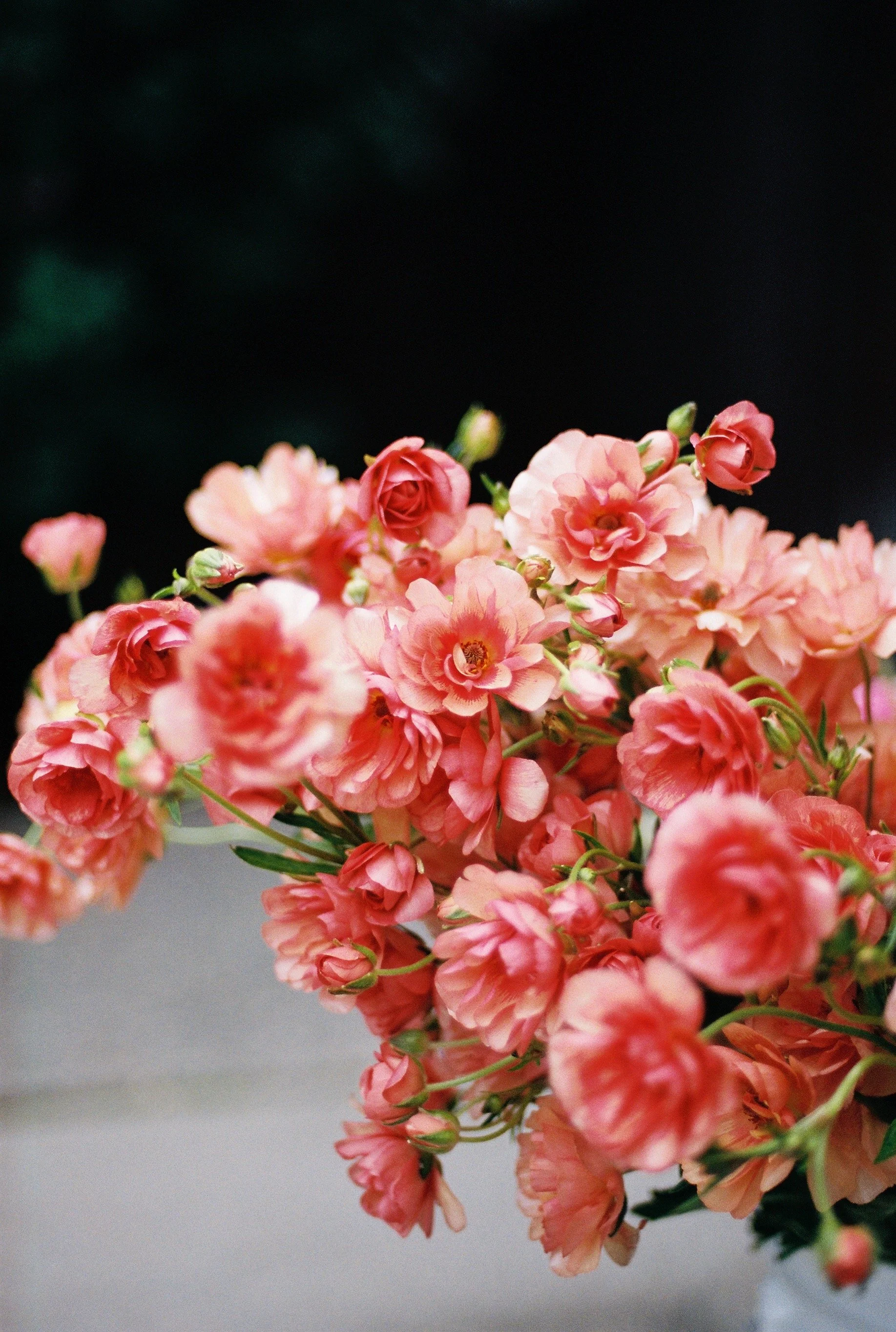
Butterfly Ranunculus “Eris”
Planting Tips for Ranunculus:
Using my hori hori knife, I dig down about 3-4 inches (not too deep, they don’t like it!) and place the corms tentacle-side down).
I space them about 6 inches apart, alternating on each side of the drip tape. This is pretty tight, but our air is dry enough that I don’t need to worry about airflow/disease very much
Growing, waiting and watching the weather:
Ranunculus usually emerge 2ish weeks later
I only cover with plastic if the temps get down into low 30s at night
I cover with shade cloth once daytime temps hit 70s
Harvesting High Quality Ranunculus:
Harvest in morning before sun is high, when buds are a quarter to halfway open. For butterfly ranunculus, harvest when center bud is open and side buds are just starting to unfurl. If the venter bud is shedding, shake its petals off or cut out the center bud.
Keep buckets filled with water that only covers lowest 3 inches of ranunculus stems. Ranunculus are prone to rotting in too much water, they only need a little in the bucket
Use floral conditioner to limit bacterial growth in bucket and keep feeding the bloom, which will continue to open once it’s out of the cooler.
Can stay in cooler up to 2 weeks with clean water and fresh stem cuts every few days
Vase Life Ranunculus & Butterfly Ranunculus:
1-2 weeks in cooler, 1 week out of cooler. Cutting stems and changing water really helps here!
Dealing with the Heat: If ranunculus could pick their perfect day, it’s 65 degrees and partly cloudy. Those kinds of days happen for maybe a month in Fresno, and mostly in March when ranunculus haven’t fully started producing blooms. Ranunculus are environmentally triggered to shut down bloom production and start heading into dormancy when the soil reaches 65 degrees. Our April temperatures often hang around the 75-85 degree mark, so I start covering ranunculus with shade cloth as soon as the forecast reaches 70.
Supply Links:
Mesh Bag (if ranunculus didn’t come in one)